
A quick peek into the report
Global Transgenic Animal Model Market Industry Overview
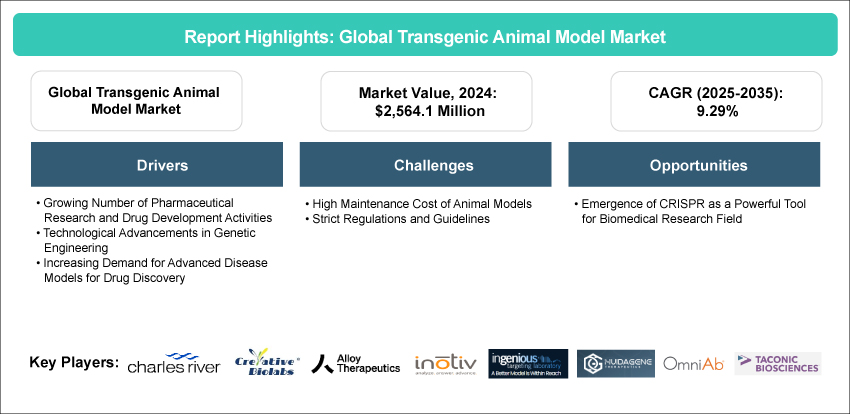
Introduction of Transgenic Animal Model
The transgenic animal model market is experiencing significant growth, driven by advancements in genetic engineering and the increasing need for precise preclinical testing. Transgenic animals, modified to carry genes from other species, are crucial for studying human diseases, testing new therapies, and improving agricultural practices. These models help researchers simulate human diseases, providing insights into disease mechanisms, genetic predispositions, and the effects of potential treatments.
As the field of precision medicine evolves, transgenic models play a key role in advancing personalized healthcare. By enabling researchers to study genetic influences on diseases like cancer, inherited disorders, and chronic conditions, these models help create more targeted, effective treatments. With the rise of gene-editing technologies such as CRISPR-Cas9, the demand for these models is growing, supporting the development of therapies tailored to an individual’s genetic makeup. The integration of these advanced models into research not only accelerates drug development but also improves patient outcomes by reducing the trial-and-error approach to treatment.
Market Introduction
The global transgenic animal model market is expected to witness substantial growth, projected to reach $6,799.3 million by 2035. The transgenic animal model market is witnessing substantial growth, fueled by advancements in genetic engineering and the increasing need for more accurate preclinical testing. Transgenic animal models, created by inserting foreign genes into an organism’s genome, play a crucial role in understanding complex diseases and testing new therapeutic interventions. These models enable researchers to simulate human diseases, providing insights into disease mechanisms, genetic influences, and the effects of various treatments.
The growing demand for personalized medicine is driving the adoption of transgenic models, as they allow for a deeper understanding of how genetic factors contribute to individual disease susceptibility and treatment response. Technologies like CRISPR and next-generation sequencing (NGS) are accelerating the development of these models by enabling more precise genetic modifications, facilitating the creation of more accurate and human-like models. This is particularly important in areas such as oncology, neurology, and genetic disorders, where personalized treatments are gaining prominence.
Moreover, the integration of artificial intelligence (AI) and big data analytics is transforming how transgenic models are used in research. These technologies enhance the efficiency of drug development processes by predicting disease outcomes, optimizing treatment strategies, and improving the precision of animal models. As these technologies continue to evolve, they will drive further innovation in the transgenic animal model market, enabling more tailored and effective therapeutic solutions. However, challenges such as ethical concerns, regulatory complexities, and the high cost of creating and maintaining these models continue to impact the market’s growth. Despite these hurdles, the continued advancements in gene-editing technologies and computational tools are expected to fuel the future expansion of the market.
Industrial Impact
Transgenic animal models are significantly impacting the biotechnology and pharmaceutical industries by advancing drug discovery and development. For example, the use of transgenic mice in Alzheimer's research has provided valuable insights into the disease’s genetic underpinnings, leading to the testing of potential therapies like the amyloid-beta-targeting drug Aduhelm. These models help researchers simulate human diseases accurately, enabling more effective preclinical testing.
In clinical trials, transgenic models improve predictability and efficiency. For instance, genetically modified mice with human cancer genes have been used to test immunotherapies like Kymriah, a CAR-T therapy developed for leukemia. By mimicking human responses, these models reduce the risk of failure in later trial stages.
The use of CRISPR technology has enhanced transgenic animal models, allowing precise gene edits. This is particularly evident in research related to sickle cell disease, where transgenic mice have been used to test gene therapies, providing a path for treatments like CTX001, which is currently in clinical trials for sickle cell anemia.
Overall, transgenic models are accelerating precision medicine, improving therapeutic efficacy, and optimizing clinical trials, leading to faster, more cost-effective drug development.
Market Segmentation:
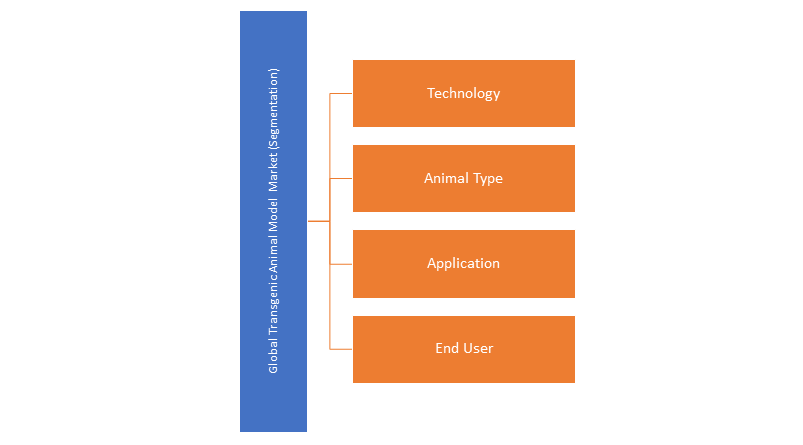
Segmentation 1: By Technology
• CRISPR/CAS-9
• Microinjections
• Embryonic Stem Cell Injections
• Others
In the global transgenic animal model market, as of 2024, the CRISPR/CAS9 segment holds the largest share at 44.96%. CRISPR/Cas9 has revolutionized the transgenic animal model market due to its precision, efficiency, and versatility in genetic modifications. Unlike traditional methods, CRISPR allows for precise gene knock-ins, knockouts, and edits at specific locations in the genome, making it faster, more accurate, and cost-effective. This has significantly accelerated the creation of animal models used in disease research, drug discovery, and personalized medicine. For example, CRISPR has enabled the development of genetically modified mice to model complex diseases like cancer, genetic disorders, and neurodegenerative diseases, which can be used to test targeted therapies and gene-editing treatments.
The rapid growth of the CRISPR/Cas9 market is driven by its ability to generate complex animal models quickly and at a lower cost compared to traditional methods. Its applications in areas such as gene therapy, cancer research, and personalized medicine are expanding, as companies and research institutions use CRISPR to create more accurate models for drug testing and therapeutic development. As the technology continues to advance, with improvements in precision and delivery, CRISPR is expected to further accelerate the pace of biomedical innovation, making it the dominant tool in genetic research and driving its fastest growth in the transgenic animal model market.
Segmentation 2: By Animal Type
• Rodent (Mice & Rats)
• Rabbits
• Pigs
• Others
Based on animal type, the global transgenic animal model market was led by the rodent segment, which held a 74.96% share in 2024. Rodents, particularly mice, dominate the transgenic animal model market, with over 95% of transgenic animals used in biomedical research being rodents. The mouse is the model organism of choice due to several key advantages: the extensive analysis of its completed genome sequence and its genetic similarity to humans. These factors make mice ideal for studying human diseases, genetic disorders, and drug responses. For instance, genetically modified mice are extensively used to model Alzheimer’s disease, enabling the study of amyloid plaques and the testing of therapies like Aduhelm, a drug aimed at reducing plaque buildup. Mice are also commonly used in cancer research, where genes like p53 are knocked out to create models mimicking human tumor growth, facilitating the evaluation of treatments such as CAR-T cell therapy.
The growth of the rodent-based transgenic animal model market is driven by the mouse's ability to undergo precise genetic manipulation, supported by robust and sophisticated techniques. This allows researchers to replicate human diseases with high accuracy. Additionally, mice's short reproduction cycle, ability to perform physiologic and behavioral tests, and their adaptability to controlled laboratory environments make them perfect for large-scale studies. These characteristics, combined with their established role in studying diseases like cancer, neurodegenerative disorders, and metabolic diseases, ensure their continued dominance and rapid growth in the transgenic animal model market.
Segmentation 3: By Application
• Drug Discovery and Development
• Disease Research
• Gene Function Studies
• Toxicology and Safety Testing
• Others
Based on application type, the drug discovery and development segment dominated the global transgenic animal model market with 54.19% share in 2024 because it is the primary user segment that applies these models across the full preclinical workflow from target validation and MoA studies to efficacy screening and early safety. Pharmaceutical and large biotechnology companies continue to allocate higher budgets to transgenic and humanized models, particularly for oncology, metabolic disorders, neurodegenerative diseases, and advanced modalities (immuno-oncology, gene and cell therapies), as these models improve translational relevance and help lower late-stage failure risk.Moreover, this segment also operates at higher study volumes and requires continuous access to licensed or custom-bred strains, which drives recurring spend. The availability of CRO-delivered, transgenic model services tailored to pharma pipelines has further streamlined adoption and reinforced demand. As a result, the drug discovery and development segment remains the largest and most commercially significant demand center in this market.
Segmentation 4: By End User
• Pharmaceutical & Biotechnology Companies
• Academic & Research Institutes
• Contract Research Organizations (CROs)
Based on end user type, the pharmaceutical and biotechnology companies dominated the global transgenic animal model market with 57.38% share in 2024. Pharmaceutical and biotechnology companies are the principal demand centers for transgenic animal models, and their R&D activity is the single largest contributor to market expansion. These organizations rely on genetically engineered animals to de-risk development — validating drug targets, interrogating disease pathways, generating efficacy and safety data, and refining dose regimens prior to first-in-human studies. In oncology, for instance, humanized transgenic mice are routinely used to evaluate immuno-oncology candidates, while larger transgenic species such as rabbits and pigs support cardiovascular and metabolic programs where physiology closer to humans is required. The accelerating shift toward precision medicine, biologics, and gene and cell therapies has amplified this need, because these modalities often target human-specific pathways that cannot be modeled adequately in vitro. At the same time, leading pharma players are commissioning bespoke transgenic lines to mirror rare, multifactorial, or pediatric diseases, thereby improving the probability of clinical success and meeting regulatory expectations for disease-relevant preclinical evidence. Together, factors such as sophisticated technology use, demand for translationally credible data, and tighter regulatory scrutiny position pharma and biotech companies as the core engines of growth and innovation in the transgenic animal model market.
Segmentation 5: By Region
• North America
o U.S.
o Canada
• Europe
o Germany
o U.K.
o France
o Italy
o Spain
o Rest-of-Europe
• Asia-Pacific
o Japan
o India
o China
o Australia
o South Korea
o Rest-of-Asia-Pacific
• Rest-of-the-World
North America maintains a dominant position in the transgenic animal model market due to several structural advantages. The region is home to the largest concentration of biopharma R&D activity, supported by a robust regulatory environment that fosters innovation. A significant number of U.S. and Canadian pharmaceutical and biotechnology companies are driving high-throughput preclinical pipelines in key therapeutic areas such as oncology, infectious disease, and metabolic disorders fields where transgenic and humanized animal models are essential for generating reliable in vivo data prior to clinical trials. Regulatory agencies like the FDA and Health Canada actively engage with emerging therapeutic modalities, including mRNA, personalized cancer vaccines, and RSV vaccines, which has spurred demand for more predictive animal models that meet stringent evidentiary standards. Additionally, North America’s investment in manufacturing infrastructure, automation, and GMP-compliant workflows extends to preclinical operations, allowing for the rapid creation and deployment of custom transgenic lines, including disease-specific and humanized models.
The region’s high burden of chronic diseases, coupled with its early adoption of precision medicine and cell/gene therapies, further drives the need for animal models that replicate human biological pathways. This convergence of strong capital availability, a dense ecosystem of contract research organizations (CROs), and a regulator-driven push for higher-quality data positions North America as the strategic epicenter of the transgenic animal model market.
Recent Developments in the Transgenic Animal Model Market
• In August 2025, Taconic Biosciences, collaborated with Cyagen Biosciences to offer preclinical researchers broader and more streamlined access to Cyagen’s extensive library of over 16,000 genetically engineered mouse models.
• In July 2025, Biocytogen Pharmaceuticals announced a major upgrade to its preclinical business division. The enhancement includes a broadened range of genetically engineered animal models such as target-humanized, immune-humanized, transgenic, and immunodeficient mice along with comprehensive preclinical services, including efficacy studies, PK/PD analysis, biomarker evaluation, and non-GLP toxicology testing.
• In October 2024, Alloy Therapeutics entered into an institutional licensing agreement with Scripps Research for its ATX-Gx platform, which enables fully human antibody discovery. This non-exclusive license allows all Scripps Research scientists to use the ATX-Gx platform in their antibody drug and vaccine development efforts
• In June 2024, Biocytogen received a U.S. patent for its RenLite platform, which enables the creation of fully human antibodies with a common light chain, thereby simplifying the development of bispecific antibodies and ADCs. This innovation enhances antibody diversity and simplifies CMC processes.
Demand – Drivers, Challenges, and Opportunities
Market Demand Drivers: Growing Number of Pharmaceutical Research and Drug Development Activities
The growing focus on pharmaceutical research and drug development is a key driver for the transgenic animal model market. As the industry shifts toward more targeted and effective therapies, the demand for transgenic animals has significantly increased. These genetically modified models are essential for addressing the complexities of modern drug development, especially in fields like personalized medicine and precision therapies. Transgenic animals simulate human disease biology, enabling researchers to test treatments in environments that closely resemble human conditions. For instance, humanized mice are used in HIV research to evaluate antiretroviral drugs before clinical trials.
With the pharmaceutical industry pushing for faster, more accurate drug discovery, the need for models that predict human responses has intensified. Transgenic animal models are critical for studying diseases that traditional models cannot replicate, such as cancer, neurodegenerative diseases, and cardiovascular disorders. For example, p53 knockout mice are used in cancer research to investigate tumor progression and test therapies targeting mutated genes, while transgenic mice expressing human tau proteins help study Alzheimer's disease. The increased investment in innovative drug and biologic research further fuels the demand for these models, which are indispensable in understanding disease mechanisms, testing new compounds, and assessing the safety and efficacy of treatments.
Market Challenges: High Maintenance Cost of Animal Models
High maintenance costs represent a major challenge in the transgenic animal model market. The development and upkeep of these models require significant financial investment at every stage, from breeding to experimental use. Specialized facilities with controlled environments are needed to house the animals, driving up capital and operational expenses compared to conventional models. Transgenic animals also demand advanced genetic engineering, continuous monitoring, and often multiple breeding generations, which extends timelines and increases labor costs for skilled professionals like geneticists and veterinarians.
For example, maintaining inbred C57BL/6 mice can cost upwards of $3,500 for animal purchase alone, excluding additional expenses for cage upkeep, veterinary care, and specialized procedures like microinjections or embryo transfers. These genetically modified animals require pathogen-free conditions and expert care, adding further to ongoing costs. While hybrid strains can lower some expenses, the overall financial burden of creating and maintaining transgenic models is prohibitive for smaller labs or startups, limiting market growth.
As a result, larger pharmaceutical companies like Pfizer or Novartis can afford the high costs for research, but smaller biotech firms and academic labs often turn to alternative models, such as cell-based assays or computational simulations. This financial barrier slows the market’s expansion, especially among smaller players.
Market Opportunities: Emergence of CRISPR as a Powerful Tool for Biomedical Research Field
The emergence of CRISPR technology has revolutionized the creation and utility of transgenic animal models in biomedical research by enabling rapid, precise, and efficient genome editing. CRISPR/Cas9 allows researchers to generate targeted gene knockouts, knock-ins, and point mutations in animals ranging from mice to large species such as pigs, sheep, and chickens with much higher accuracy and lower cost compared to older methods such as homologous recombination in embryonic stem cells. CRISPR accelerates the development of disease models that closely mimic human pathologies, such as neurodegenerative disorders, cardiovascular disease, cystic fibrosis, and cancer, in animals large and small. These models help elucidate disease mechanisms and screen therapies more reliably. It enables complex genetic manipulations, including simultaneous editing of multiple genes, creating models for polygenic diseases or studying gene interactions.
CRISPR facilitates the production of bioreactor animals; for example, chickens engineered to produce pharmaceutical proteins in eggs or animals engineered for antibody manufacturing, which expands industrial and therapeutic applications. It allows the development of transgenic animals with disease resistance (e.g., virus-resistant poultry), supporting both food security and biomedical research.
Beyond gene editing, CRISPR is applied in regenerative medicine, tissue engineering, and epigenome editing, allowing the modulation of gene expression without changing DNA sequences. It is also employed in CRISPR-based diagnostic tools, such as SHERLOCK and DETECTR, which provide rapid and highly sensitive detection of viral infections and genetic mutations.
Market Trends: Rising Demand for Personalized Medicine
The growing emphasis on personalized medicine is significantly increasing demand for transgenic animal models, especially humanized mice, in drug discovery and therapeutic development. As treatments become more tailored to an individual’s genetic profile, transgenic models are essential for testing gene therapies, immunotherapies, and patient-specific drug regimens. Humanized mouse models—engineered to express human genes or mutations—allow researchers to study human diseases with higher accuracy and predict treatment outcomes more effectively.
These models are crucial in gene-based therapies like antisense oligonucleotides (ASOs), used to silence harmful genes in neurodegenerative diseases such as Alzheimer’s, Huntington’s, and ALS. Successful studies in humanized mice have shown reduced disease-related gene expression and symptom improvement. Additionally, integrating CRISPR/Cas9 technology with transgenic models enables targeted gene correction, such as reducing hSOD1 levels in ALS mice to delay disease progression—paving the way for future gene-editing therapies.
Transgenic models also play a vital role in testing immunotherapies like CAR-T cells and antibody-based treatments that target human-specific proteins. For instance, humanized mice with human immune systems are used to evaluate immune responses in cancer and Alzheimer’s research. Similarly, patient-derived xenograft (PDX) models—created by implanting human tumor tissues into mice—help assess how personalized therapies perform against a patient’s unique genetic makeup.
As personalized medicine continues to evolve, transgenic animal models have become indispensable for developing genetically targeted therapies. They enable deeper insights into human disease diversity, streamline drug development, and support the creation of safer, more effective treatments tailored to individual patients.
Analyst’s Thoughts
According to the Principal Analyst – BIS Research, “The transgenic animal model market is gaining momentum, driven by rising pharmaceutical R&D, precision medicine, and CRISPR-based innovation that enable faster, more accurate disease modeling. However, high maintenance costs remain a key barrier, limiting accessibility for smaller players. Long-term growth will favor companies that leverage automation and cost-efficient gene-editing technologies to expand model availability and reduce overheads.”
Transgenic Animal Model Market - A Global and Regional Analysis
Focus on Technology, Animal Type, Application, End User, and Regional Analysis - Analysis and Forecast, 2025-2035
Frequently Asked Questions
A transgenic animal model is a laboratory animal most commonly a mouse, but also rats, rabbits, pigs, or zebrafish whose genome has been intentionally modified to introduce, delete, overexpress, or “humanize” a specific gene so that researchers can study human-relevant biology in a living system. By engineering these animals to carry human disease genes (for example, APP/PS1 for Alzheimer’s), human immune checkpoints (like PD-1/PD-L1), or mutations seen in cancer or metabolic disorders, scientists can reproduce disease mechanisms that don’t naturally occur in the species. This makes transgenic models far more predictive than basic in vitro assays when evaluating target validity, drug efficacy, on-target/off-target effects, and dosing strategies before entering clinical trials. Because they allow the same engineered biology to be reused across multiple studies, they also support standardization of preclinical data, which is valuable for pharma and regulatory discussions. In short, transgenic animal models are a cornerstone of modern drug discovery and translational research because they bridge the gap between cell-based experiments and human trials.
To strengthen their position in the growing transgenic animal model market, leading players are adopting model innovation, service integration, and strategic partnerships with biopharmaceutical customers. Companies are increasingly collaborating with pharma, biotech, and academic research centers to co-develop humanized and indication-specific models that better reflect oncology, immunology, metabolic, and gene therapy pipelines. Advanced genome-editing platforms, particularly CRISPR/Cas9, are being leveraged to shorten model development timelines and enable rapid customization for rare or complex diseases. Additionally, providers are moving beyond basic model supply to offer end-to-end solutions including colony management, phenotyping, in vivo efficacy studies, and GLP-compliant data packages positioning themselves as full preclinical partners rather than commodity vendors. Investments in regional breeding and service facilities across major R&D hubs (North America, Europe, and Asia, including South Korea) are improving turnaround times and meeting local regulatory and biosecurity requirements. Furthermore, enhanced digital documentation, standardized phenotyping datasets, and tighter quality systems are being introduced to support sponsor audits and regulatory submissions, ensuring higher customer stickiness and long-term competitiveness in this specialized market.
The following are the USPs of this report:
• Market regulations and key trends in the transgenic animal model market
• Dynamic analysis of the opportunities, trends, and challenges in the market
This report is essential for pharmaceutical and biotech companies, diagnostic firms, researchers, and CROs. It offers insights into transgenic animal models helping companies and researchers stay updated on advancements. Pharma and biotech firms can leverage it for R&D and drug development.